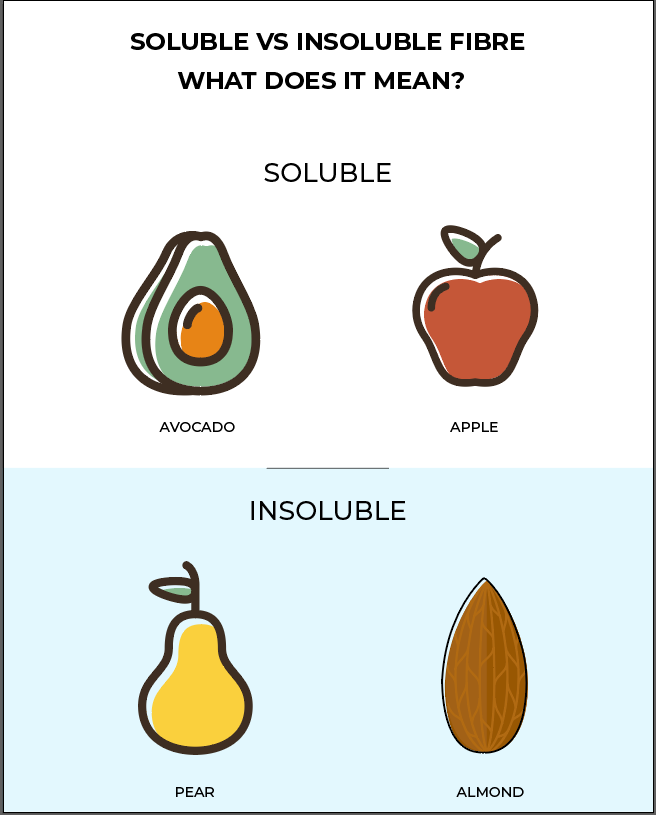
Soluble and insolublefiber provide many of the same benefits, however, insolublefiber promotes digestive regularity by increasing the speed at which food moves through the digestive system and may help prevent certain gastrointestinal conditions. Solublefiber dissolves in water while insolublefiber doesn't. Adding both soluble and insolublefiber to your diet can offer different health benefits. Solublevs. Insoluble: The TRUTH About Which Fiber Is BEST for Your Health.“Both soluble and insolublefiber have key roles to play in healthy digestion,” says Eileen Wang, MD, MSCP. Among the different types of fiber, soluble and insoluble are the most discussed. InsolublevsSolubleFibre: Key Differences. Solublefibre dissolves in water and forms a gel-like substance in the gut. It also contributes to an increase in faecal bulk, making it easier to pass stools. Solublefiber includes plant pectin and gums. Insoluble: This fiber doesn’t dissolve in water and, therefore, passes through the intestines undigested. It includes plant cellulose, hemicellulose, and lignin. Most plants contain both soluble and insolublefiber, but in different amounts. Some are insoluble. Soluble viscous fibre forms a gel-like material in water that helps lower cholesterol and maintain healthy blood sugar levels.Insolublefibre does not dissolve in water. Insolublefibre can add bulk to the stool. Insolublevs. SolubleFiber. All types of solublefibers slow digestion, so it takes longer for your body to absorb sugar (glucose) from the foods you eat. This helps prevent quick spikes in your blood sugar levels, which is an important part of managing diabetes . Solublevs. insolublefiber. There are 2 different types of fiber -- soluble and insoluble. Both are important for health, digestion, and preventing diseases. Solublefiber attracts water and turns to gel during digestion. This slows digestion. InsolubleFibervs. SolubleFiber.Insolublefiber moves through your digestive system as-is and solublefiber breaks down. "Solublefiber is found in foods such as oat bran, nuts, seeds, beans, lentils, and some fruits and veggies," explains Gorin. Soluble And InsolubleFiber Foods. Best Sources Of SolubleFiber.here is a difference between solublefibrevsinsolublefibre that make us a decision to what to eat | Dietary fiber foods, Fiber foods, Fiber rich foods. SolubleVs. InsolubleFibre. By Claire Shortt, PhDMarch 25, 2020 Food, Health.This type of fibre retains water. It forms a gel-like material during digestion. It tends to slow down digestion and helps with the absorption of nutrients. Some key health benefits of solublefibre include Most foods naturally contain both soluble and insolublefiber, but the proportion of each type varies from one food to another. Eating a varied, balanced diet helps ensure you get a good mix of both kinds of fiber. Solublevsinsolublefiber - we beed a balance of the two for healthy, regular bowel movements. If you’re struggling wih constipation or diarrhea, take a look at your diet to see if you are getting both types of fiber and ENOUGH overall fiber. Soluble and insolublefibres are essential components of a healthy diet, each offering unique benefits. Solublefibre regulates cholesterol levels, stabilises blood sugar, and supports gut health, while insolublefibre promotes regular bowel movements and prevents constipation.