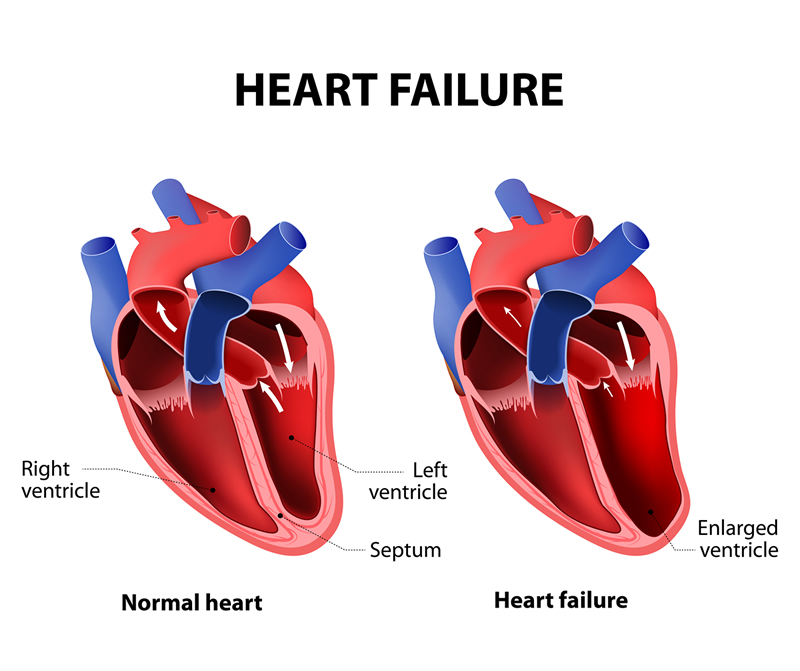
Learn about congestive heart failure, a long-term condition that affects your heart's ability to pump blood well. Find out the causes, risk factors, diagnosis, stages and treatment options for this chronic disease. · Health experts can categorize congestive heartfailure into four stages (A, B, C, and D). The survival rate decreases as the condition progresses. Treatment approaches vary depending on the... · Learn about this chronic disease that needs lifelong management. Find out what treatments help you live longer and may even strengthen your heart. Other articles from mayoclinic.orgMay 20, 2025 · Heartfailure (sometimes called congestive heartfailure) is a chronic, progressive condition in which the heart muscle is unable to pump enough blood to meet the body’s needs for blood and oxygen. · Heart failure, or congestive heart failure (CHF), means the heart can't pump enough blood. Learn about the signs, symptoms, and causes. More than 5 million people in the United States have congestive heartfailure. It’s the most common diagnosis in hospitalized patients over age 65. One in nine deaths has heartfailure as a contributing cause. To avoid heart failure, there’s a need to prevent other heart problems. What is congestive heart failure?Congestive heart failure Congestive heart failure usually is a chronic, progressive condition in which the heart is unable to pump the quantity of blood required to meet the body's needs. It is generally the result of heart disease but may be secondary to non-cardiac conditions such as fluid overload and anemia.What are the complications of heart failure?Heart failure is a long-term disorder that worsens gradually. Also referred to as congestive heart failure, the heart loses its capability of properly pumping blood. With the reduced pumping power of the heart, the organs get damaged, and the lungs start gathering fluids. This condition can lead to multiple complications, including:Is congestive heart failure a lifelong condition?Congestive heart failure is a chronic, or lifelong, condition. You’ll need to treat it for the rest of your life. How do I take care of myself? With the right care and treatment plan, many adults still enjoy life even though congestive heart failure limits their activities. You can care for yourself by: Taking your medications. Being active. Learn about congestive heart failure, a condition in which the heart cannot pump blood efficiently. Find out the types, stages, diagnosis, treatment, prevention and support for this serious medical problem. · Heartfailure (sometimes called congestive heartfailure) is a chronic, progressive condition in which the heart muscle is unable to pump enough blood to meet the body’s needs for blood and oxygen. · Heart failure, or congestive heart failure (CHF), means the heart can't pump enough blood. Learn about the signs, symptoms, and causes. More than 5 million people in the United States have congestive heartfailure. It’s the most common diagnosis in hospitalized patients over age 65. One in nine deaths has heartfailure as a contributing cause. To avoid heart failure, there’s a need to prevent other heart problems. Learn about congestive heart failure, a condition in which the heart cannot pump blood efficiently. Find out the types, stages, diagnosis, treatment, prevention and support for this serious medical problem. CongestiveHeartFailure is a condition in which your heart is unable to send sufficient fresh blood for the body’s needs. When someone is diagnosed with this condition, their first reaction is a... One of the most common symptoms of congestiveheartfailure is getting out of breath easily during routine activities, like climbing stairs. When you have CHF, fluid accumulates in the lungs... Congestiveheartfailure (CHF) is a condition in which the heart is unable to pump enough blood to meet the body’s needs. The term “congestive” refers to the accumulation of fluid that can... Congestiveheartfailure (CHF) is a chronic and progressive condition where the heart’s ability to pump blood effectively diminishes, leading to a range of symptoms and complications. Congestiveheartfailure (CHF) is a clinical syndrome in which the heartfails to pump blood at the rate required by metabolizing tissues or in which the heart can do so only with an... Congestiveheartfailure—often referred to as heartfailure—is the term used to describe what happens when the heart is unable to pump enough blood to meet the body’s needs. CongestiveHeartFailure. Pulmonary interstitial edema. O Thickening of the interlobular septa. CongestiveHeartFailure. REFERENCES. 1. Heart and Stroke Statistical Update. Dallas: Ameri-can Heart Association, 1999. 2. Schocken DD, Arrieta MI, Leaverton PE, Ross EA. Medicines and pregnancy can cause edema. It also can be the result of a disease, such as congestiveheartfailure, kidney disease, venous insufficiency or cirrhosis of the liver. - Congestiveheartfailure: leading a decreased level of oxygen in the blood. - Tachycardia: abnormal heart beat. Learn how the Evolut™ TAVR system can help you treat your TAVR patients. Discover the impact our latest technology can have on your TAVR procedures.