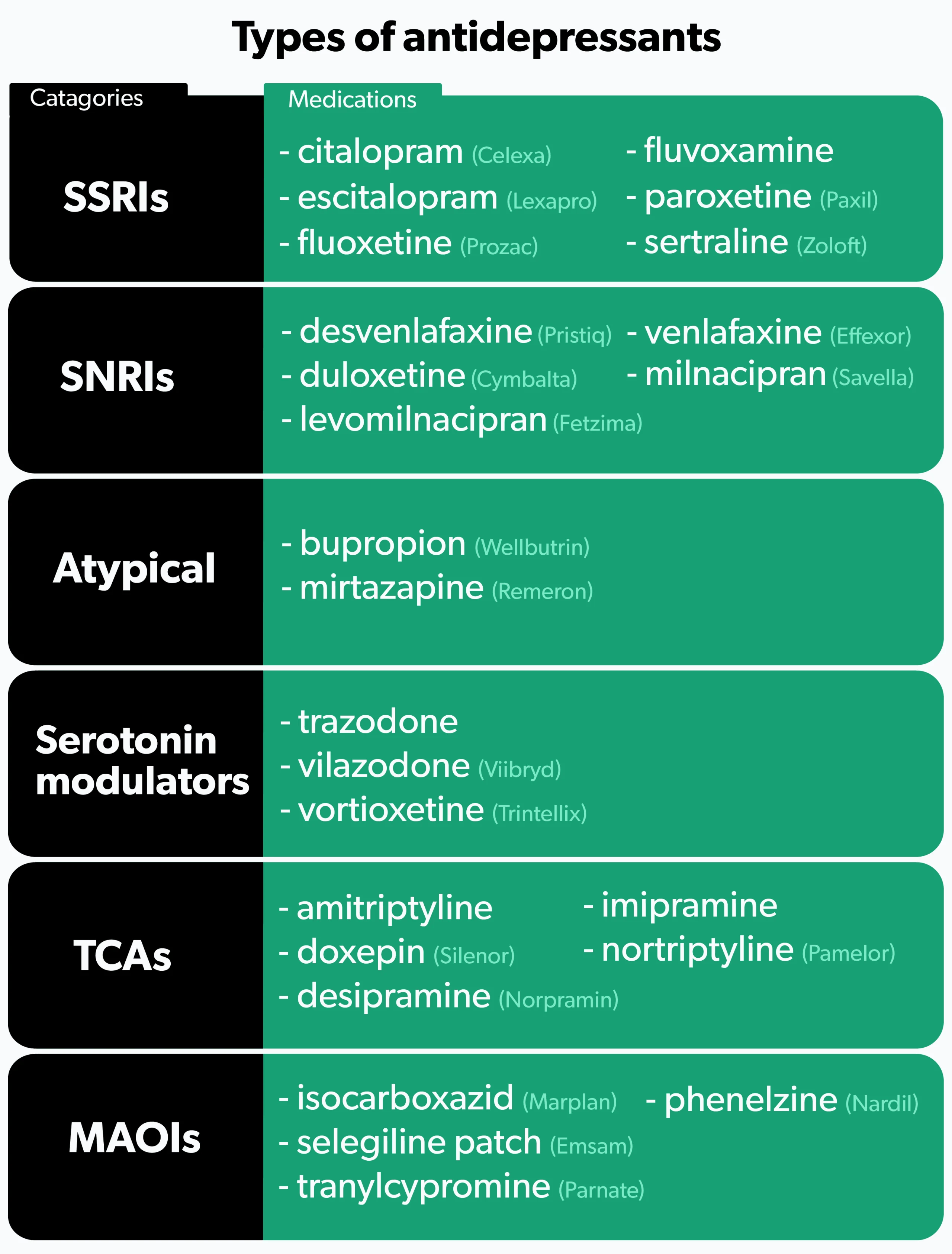
Medical uses Antidepressants are prescribed to treat major depressive disorder (MDD), anxiety disorders, chronic pain, and some addictions. Antidepressants are often used in combination … Serious sideeffects include serotonin syndrome, mania, seizures, an increased risk of suicidal behavior, and an increased risk of bleeding.[2] Antidepressant discontinuation syndrome is less likely to occur with fluoxetine than with other antidepressants. Antidepressants are medications that treat mental health conditions like depression, anxiety, PTSD and some eating disorders. They can also help with long-term pain and trouble sleeping. · Many people take antidepressants. Learn about antidepressant side effect, the different types of antidepressants, and more. Medicine options to treat depression include SSRIs, SNRIs, atypical antidepressants, tricyclic antidepressants, MAOIs and other drugs. · Antidepressants alter the balance of some of the chemicals in the brain (neurotransmitters). MAOI antidepressants prevent the breakdown of neurotransmitters such … · Although not classified as antidepressants, some are approved for this purpose and are often combined with SSRI antidepressants. They may also be used with an antidepressant … Your trusted, science-backed resource for detailed information on antidepressants. Compare medications, read latest research, and find expert insights. · Tricyclic antidepressants (TCAs) and MAOIs (monoamine oxidase inhibitors) are older classes of antidepressants. Their side effects can be more severe than those of the … · WebMD explains the different types of antidepressants and how to talk to your doctor about finding one that can help your depression symptoms. Common Generic Name(s): fluoxetine, fluoxetine HCl, fluoxetine hydrochlorideDrug Classes: selective serotonin reuptake inhibitor (SSRI) antidepressant Fluoxetine is used to treat depression or obsessive-compulsive disorder in adults. Learn about sideeffects, interactions and indications. Prozac and its generic version fluoxetine are antidepressant medications that may cause sideeffects. Here’s what to know about the common and serious ones. Fluoxetine (Prozac) is an antidepressant medication, commonly prescribed to treat depression and other mental health conditions. It is generally safe to use and does not often lead to serious adverse effects or addiction. Common sideeffects of Fluoxetine include: sleep problemsLong-Term Effects. See "What Are SideEffects Associated with Using Fluoxetine?" Cautions. Clinical worsening and suicidal ideation may occur despite medication in adolescents and young adults (aged 18-24 years). Prozac (fluoxetine) is a prescription capsule used for OCD, depression, bulimia, and panic disorder. Learn about sideeffects, doses, its generic version, and more. Common sideeffects: Nausea, dry mouth, headaches, feeling anxious, dizziness, flushing Serious sideeffects requiring immediate medical help: Thoughts of harming or killing yourself, itchy rash with swollen tongue/lips, wheeze or shortness of breath. How Does Fluoxetine Work? FluoxetineSideEffects. Fluoxetine and Serotonin Syndrome. Fluoxetine and Pregnancy, Fertility. Is Fluoxetine Addictive? Alternative Treatments to Avoid FluoxetineSideEffects. Long-Term Recovery With ATMC. Discover the common sideeffects of 40 mg fluoxetine (Prozac) and how they may impact your mental health. Learn from user experiences and expert insights. · Antidepressant, any member of a class of drugs prescribed to relieve depression. There are several major classes of antidepressant drugs, the best known of which include the …